Economic development is and has been too often carried out at the expense of natural resources. In a context of global changes (6th biodiversity crisis, climate change, peak oil and energy crisis, unprecedented rise in world population, etc.), our current destructive development practices are leading us quickly and collectively to the brink.
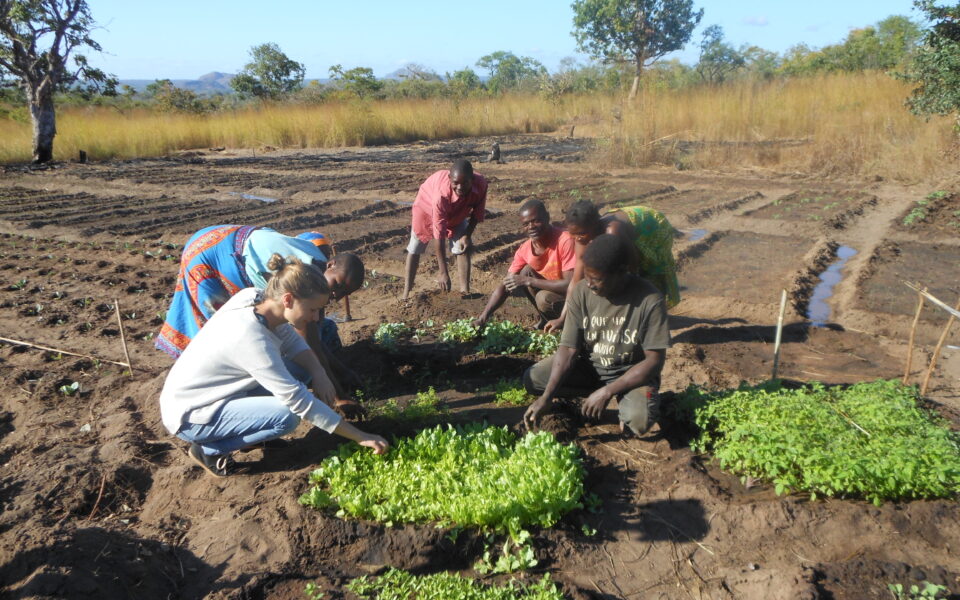
To help change the dominant development paradigm, SalvaTerra has been providing tailor-made support and advice since 2012 to accompany and implement rural development projects - mainly in the countries of the South (Africa, Latin America and South-East Asia) but also in the countries of the North - that reconcile the sustainable management of terrestrial ecosystems and wealth creation for local populations (agricultural products, timber and non-timber forest products etc.).
Rural populations in the South are often in a state of severe deprivation, which only worsens as the surrounding 'natural capital' deteriorates. Faced with this situation, we approach our work with pragmatism and passion, adapting to the national context and the problem at hand and, above all, working with a results-oriented approach.

AgroParisTech was very satisfied with the professionalism with which SalvaTerra carried out these services. Its reliability, scientific rigour, international recognition [...] have justified AgroParisTech having repeatedly requested the services of this company for almost 10 years.
Annual training on “Tropical forests and climate change” for AgroParisTech
AgroParisTech – Institute of Life and Environmental Sciences and Industries, 10/2022

My organization is satisfied with this service. The basic knowledge necessary to understand agroecology and its practices was transmitted in a clear and synthetic way. The case studies concretely illustrated the issues at stake and, above all, allowed a link with the evaluation tool developed by SIDI, which was well integrated by the consultant.
Training in agroecology for NGO SIDI, a solidarity investor
International solidarity for development and investment, 10/2021

My organization is satisfied with this service, which took place in a fluid and efficient manner. SalvaTerra was responsive and the deliverables submitted were of good quality.
GHG Impact Analyses of WAT4CAM and Svay Check Irrigated Rice Projects
French Development Agency, 07/2024

My organization is satisfied with the performance of [SalvaTerra] and the consultant has shown exceptional professionalism in difficult working conditions. The participants in the training were completely satisfied with the training, presentations and practical working sessions and would like to receive follow-up training with SalvaTerra.
Climate-smart agriculture training for agricultural teachers and engineering students
Winrock International, 01/2017

My organization is satisfied with this service in a context of execution limited by the COVID health crisis.
Feasibility study of the CAFI Sustainable Land Use Programme (PUDT)
French Development Agency, 10/2022

My organization is satisfied with this service, particularly because of the quality of the technical work in terms of mapping and traceability and the significant involvement provided in the identification of pilot sites.
Technical assistance to the “Cocoa 0 deforestation” programme in Côte d’Ivoire
Institut européen de la forêt, 09/2016

Olivier BOUYER has adapted very well, in difficult conditions. Competent and very serious, he maintains excellent relations with all our partners. It is an excellent technical assistant.
Support for the structuring of rice groups in the Northern Region
French Ministry of Foreign Affairs, 07/2003

Consistent with the terms of the contract, including expected results and deadlines. The service was therefore satisfied.
Study of the Dominican coffee sector and the certification potential of specialty coffees
Centre de coopération internationale en recherche agronomique pour le développement, 02/2013

Johan Pasquet conducted and completed the performance in a satisfactory manner.
Evaluation of the Sustainable Food System and the Fight against Malnutrition project in Dakar
Tero, 11/2018

My organization is satisfied with this service, which was carried out on time and competently. The conclusions of the evaluation were relevant and the performance provided concrete leads for the development of a new programme on this subject.
Mid-term and final evaluation of the FONABES Sahel project and pre-feasibility of a 2nd phase
French Facility for Global Environment, 10/2022

My organization is satisfied with this performance and with the report, which was very good, which allowed the project to be submitted on time.
Feasibility study of the project Restoration of forests and landscapes in the Central African Republic
Organisation des Nations Unies pour l’alimentation et l’agriculture, 12/2017

My organization is satisfied with the way this performance went.
Integration of climate change issues within the Ministry of Agriculture
Expertise France, 10/2022

Satisfied [...] with the quality of the work carried out, the service provider having demonstrated great adaptability and ability to listen to the expectations of the various stakeholders.
Feasibility study for the Sustainable Management of Resources and Territory Project
French Development Agency, 03/2025

My organization is highly satisfied with SalvaTerra's performance and appreciated in particular their accurate innovation competencies and client-orientation.
Estimating the costs/benefits of REDD+ in Lebanon, Tunisia and Turkey
Agence de coopération technique allemande, 02/2014

This service was carried out with diligence and professionalism and allowed a very good implementation of the operations by our teams, which gave us great satisfaction.
Prototyping an Improved Stove Model with Chimney in Kericho County
Pur projet, 11/2022
Olivier, Anis, Eva, Alice, David, Johan, Sophia, Catherine, Annaël... A team of experts at your service.
The SalvaTerra TeamSustainable forest management, Agroecology, Adaptation to climate change, Corporate social responsibility...
Our activitiesDiscover all our references
10 Feb. 2026
La finance climat et les marchés carbone occupent aujourd’hui une place centrale dans les stratégies de lutte contre le changement climatique. Pour les pays forestiers, les territoires côtiers ou les acteurs de la gestion durable des terres, ils représentent une opportunité majeure de mobiliser des financements additionnels, à condition de s’appuyer sur des cadres solides et crédibles.
Les projets carbone et climat - qu’ils concernent la REDD+, les mangroves (« carbone bleu ») ou l’agriculture - nécessitent une expertise technique pointue, une compréhension fine des standards internationaux et une bonne intégration dans les politiques publiques nationales.
27 Jan. 2026
📢 𝐄𝐭 𝐬𝐢 𝐝𝐞𝐬 𝐝𝐞́𝐜𝐡𝐞𝐭𝐬 𝐚𝐠𝐫𝐢𝐜𝐨𝐥𝐞𝐬, 𝐦𝐚𝐫𝐢𝐧𝐬 𝐨𝐮 𝐟𝐨𝐫𝐞𝐬𝐭𝐢𝐞𝐫𝐬 𝐜𝐚𝐜𝐡𝐚𝐢𝐞𝐧𝐭 𝐝𝐞𝐬 𝐜𝐡𝐚𝐢̂𝐧𝐞𝐬 𝐝𝐞 𝐯𝐚𝐥𝐞𝐮𝐫 𝐞𝐧𝐜𝐨𝐫𝐞 𝐬𝐨𝐮𝐬-𝐞𝐱𝐩𝐥𝐨𝐢𝐭𝐞́𝐞𝐬 ?
♻️ 𝐄𝐭 𝐬𝐢 𝐥’𝐞́𝐜𝐨𝐧𝐨𝐦𝐢𝐞 𝐜𝐢𝐫𝐜𝐮𝐥𝐚𝐢𝐫𝐞 𝐬’𝐢𝐧𝐯𝐞𝐧𝐭𝐚𝐢𝐭 𝐝’𝐚𝐛𝐨𝐫𝐝… 𝐬𝐮𝐫 𝐥𝐞 𝐭𝐞𝐫𝐫𝐚𝐢𝐧 ?
Dans le cadre de la feuille de route 2021–2026 de CAP Business Océan Indien, soutenue par l’AFD, SalvaTerra a mené fin 2025 une mission de terrain à Maurice, aux Seychelles et à Madagascar afin d’analyser le potentiel de plusieurs filières de valorisation de la biomasse à l’échelle régionale.
20 Jan. 2026
Face à la multiplication des enjeux climatiques, environnementaux et socio-économiques, de nombreux acteurs portent aujourd’hui des idées de projets ambitieuses. Pourtant, passer d'une intention stratégique à un projet financé et mis en œuvre est loin d’être aisé.
Les études de faisabilité et les formulations de projets constituent une étape clé pour transformer une idée, un diagnostic territorial ou sectoriel, en un projet solide, cohérent et aligné avec les standards internationaux des bailleurs de fonds.
13 Jan. 2026
Le projet « Forêts, Jaguars et peuples du plateau des Guyanes », porté par Panthera avec ACT et IEPÉ, vise à renforcer la protection de la biodiversité sur le plateau guyanais en s’appuyant sur le jaguar comme espèce emblématique. Inscrit dans la Feuille de route « Jaguar 2030 », il couvrira les quatre pays du plateau (Guyana, Suriname, Guyane, Brésil) pour un budget estimé à 6,5 M€, dont 2 M€ sollicités auprès du FFEM. Prévu sur quatre ans à partir de 2026, le projet répond aux pressions croissantes liées aux infrastructures, à l’exploitation minière et forestière et à l’expansion agricole, responsables de la fragmentation des habitats. Il prévoit d’améliorer les connaissances sur le jaguar, de renforcer les capacités des communautés locales et peuples autochtones, de développer des activités génératrices de revenus alternatives et de renforcer la coopération régionale.